Traders of Environmental Progress
STX Group is a global environmental commodities trader offering physical and financial solutions across compliance and voluntary systems for energy, fuels, gas and carbon markets.

Traders of Environmental Progress
STX Group is a global environmental commodities trader offering physical and financial solutions across compliance and voluntary systems for energy, fuels, gas and carbon markets.
Transforming Climate Challenges into Business Progress
STRIVE is the consulting division of the STX group, helping companies achieve their climate goals through high-impact strategies and optimized decarbonization pathways.
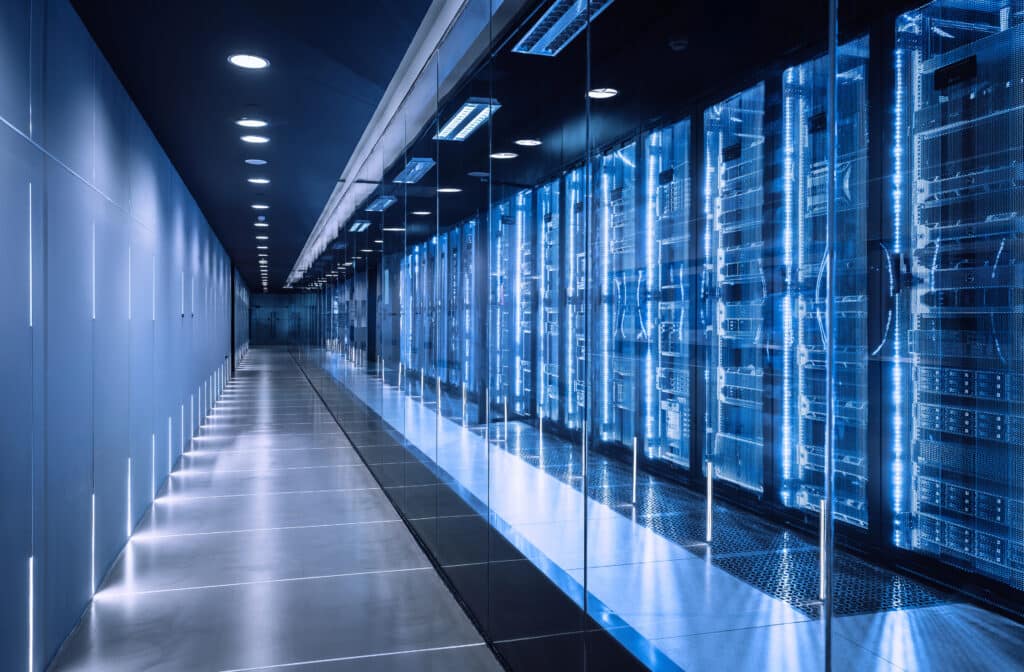
Fueled by enormous demand for digital services, data centers are at the forefront of the global digital economy, experiencing unprecedented growth and transformation. As of August 2024, there are over 7,000 data centers worldwide, roughly double the amount in 2015. The number is expected to rise further due to the proliferation of digital services, expansion of cloud computing, and growing reliance on data-driven technologies like AI.
As reported in 2023 by the International Energy Agency (IEA), global data centers consume approximately 460 TWh of electricity annually, surpassing the yearly electricity production of countries like Italy or Australia. This is about 6% of global electricity demand. The IEA projects that data center power use will increase to 1,050 TWh in 2026.
With this ongoing expansion, decarbonization emerges as an urgent focus due to the industry’s significant electricity use, prompting a shift toward renewable energy sources to reduce energy consumption and carbon footprint.
Driven by advancements in cloud computing, artificial intelligence, big data and IoT, the data center industry continues to boom, requiring robust infrastructure to manage enormous data volumes and computing requirements. The United States is currently the largest data center market, with more than 2,300 facilities, representing 33% of the global share (IEA), with Northern Virginia, Dallas and Silicon Valley as main hubs.
According to Statista, the Asia Pacific region follows, counting over 1,700 facilities in 2024, with China leading with ~450 data centers. Germany and the UK account for ~30% of the European population, with the majority of data centers located in financial centers like Frankfurt, London, Amsterdam, Paris and Dublin.
In the European Union (EU), data center electricity consumption was estimated at just under 100 TWh in 2022, almost 4% of total EU electricity demand. With many additional data centers planned, consumption in the EU data center sector is forecast to reach nearly 150 TWh by 2026. US data center electricity use is expected to grow rapidly as well, from around 200 TWh in 2022 (~4% of US electricity demand) to almost 260 TWh in 2026 to account for 6% of total electricity demand. Growth will be driven by increased adoption of 5G and cloud-based services, and competitive state tax incentives.
Companies often cite rising costs as a barrier to sustainability and decarbonization. To support growth in the data center sector, governments worldwide are offering incentives—including tax breaks, reduced power costs and grants—aimed at making regions attractive for data center investments.
For example, US federal tax incentives through the Inflation Reduction Act, Germany’s Energy and Climate Fund grants for energy-efficient data centers, and Ireland’s zero percent VAT rate on data center electricity usage are helping to draw developers looking for both financial returns and sustainability.
The data center sector’s high electricity demand cannot be ignored. As early as 2020, the European Commission flagged the need for energy-efficient and sustainable data centers in its Digital Strategy report. The EU’s Energy Efficiency Directive (EED), including the 2022 recast, highlights the effort needed in data centers. In the revised Directive (EU) 2023/1791, the EED raises the EU energy efficiency target and makes certain energy consumption goals binding for member states. It also introduces requirements to monitor and report on energy performance of data centers.
Operators of data centers with installed IT power demand of at least 500 kW must publicly report certain sustainability information. The data includes energy consumption, temperature set points, waste heat utilization, water use and use of renewable energy (split by on-site generation, PPA and Guarantees of Origin). This is set by the EU Delegated Regulation for Data Centers 2024/1364, adopted in March 2024, in force from June 2024.
Data centers with total rated power greater than 1 MW must use waste heat for heating or recovery purposes unless they prove that is technically or economically unfeasible. The revised EED and delegated acts apply to all companies operating data centers in the EU, including foreign ones.
Amid growing environmental concerns, the data center industry is increasingly turning to renewable energy to power operations. Innovations such as advanced cooling systems, increased rack density and modular construction are gaining traction under sustainability goals.
Major tech firms like Amazon, Microsoft and Google are taking steps toward powering data centers sustainably. Amazon has achieved 100% electricity matching with renewable sources, seven years ahead of target. Microsoft aims for 100% renewable energy by 2025. Google is working toward 24/7 carbon-free energy across all operations by 2030.
Solar, wind, hydro and biomass are among the energy sources adopted to reduce carbon impact. Beyond green power procurement, data centers can diversify sustainability by incorporating renewable energy products like biofuels and renewable gas for backup power during grid outages. Such measures help reduce emissions and ensure reliability. Data centers can also extend decarbonization by engaging with their supply chains.
At STX Group we advocate for companies globally to set science-based GHG emissions reduction targets in line with Paris Agreement goals. We recommend assessing both direct and value chain emissions using recognized frameworks such as the Science Based Targets initiative or ISO-14068.
As digitalization increasingly permeates society, demand for data center services will surge alongside innovation and environmental responsibility. With renewable energy procurement and optimization strategies available in the market, the future of this industry is bright and sustainable, reflecting a dual commitment to growth and environmental care.
Discover how STRIVE by STX can help you achieve your climate targets with our tailored decarbonization solutions for the telecommunications value chain.