Traders of Environmental Progress
STX Group is a global environmental commodities trader offering physical and financial solutions across compliance and voluntary systems for energy, fuels, gas and carbon markets.

Traders of Environmental Progress
STX Group is a global environmental commodities trader offering physical and financial solutions across compliance and voluntary systems for energy, fuels, gas and carbon markets.

Transforming Climate Challenges into Business Progress
STRIVE is the consulting division of the STX group, helping companies achieve their climate goals through high-impact strategies and optimized decarbonization pathways.
Sweden is at the forefront of global decarbonization, aiming for net-zero greenhouse gas (GHG) emissions by 2045. The country has also set an ambitious goal to cut GHG emissions from domestic transport by at least 70% by 2030 compared to 2010 levels. Further emission reductions are crucial to meeting the EU’s 2030 renewable energy target.
To support this goal Sweden has implemented a tax exemption system to encourage the use of biogas and bio-propane, helping to reduce GHG emissions. Since 2003, Sweden has granted tax exemptions from energy and CO₂ taxes for sustainable non-food-based biogas and bio-propane used as motor fuel (the “motor fuel scheme”) and since 2007 for heat generation (the “heating fuel scheme”). These exemptions apply to both domestically produced and imported biogas and bio-propane.
In 2020 the European Commission approved an extension of the tax exemption schemes until December 31, 2030. However in December 2022 the Court of Justice of the European Union annulled the Commission’s 2020 decision on procedural grounds. The Court ruled that the Commission should have conducted a formal investigation to assess whether the tax exemptions, combined with support from other Member States—particularly Denmark—resulted in overcompensation for biogas producers.
In January 2024 the European Commission launched a formal investigation, allowing Sweden and other stakeholders to submit their comments. By October 2024 the Commission concluded that the tax exemption schemes complied with EU state aid rules and reapproved both the motor fuel scheme and the heating fuel scheme.
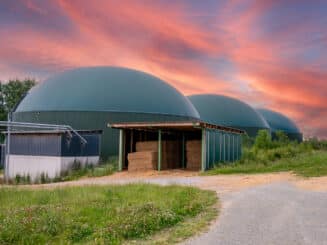
The tax exemption schemes are designed to promote the use of sustainable non-food-based biogas and bio-propane as motor and heating fuels, supporting environmental protection efforts. Biogas is methane derived from biomass, while bio-propane is propane or butane produced from biomass. Without the exemptions, biogas would be taxed at the same rate as fossil methane and bio-propane at the rate of fossil propane.
The exemptions help bridge the cost gap between sustainable non-food-based biomethane/fuels and their fossil-based counterparts, making renewable alternatives more competitive.
To qualify for the tax exemptions biogas and bio-propane must meet sustainability and GHG saving criteria under Sweden’s Act on sustainability criteria for biofuels, bioliquids and biomass fuels. Only non-food-based biogas and bio-propane fulfilling the criteria are eligible. In cases where biogas or bio-propane is blended with other fuels the exemptions apply only to the renewable part.
Direct beneficiaries must obtain a decision from the Swedish Energy Agency (SEA) showing that the biogas or bio-propane they use is sustainable and non-food-based.
There are no restrictions on the production technology used; all biogas production methods using sustainable biomass are accepted.
Direct beneficiaries must report to the Swedish Energy Agency (SEA). The SEA collects data on both domestic production and imports. Required information includes:
Bio-propane is not subject to the same reporting obligations due to its limited use in Sweden.
With the European Commission’s reapproval of the tax exemptions companies in Sweden can again benefit from tax exemptions on biogas and bio-propane used for heating or as motor fuel. They can deduct tax in their returns or request refunds.
For biogas or bio-propane used for heating where no tax return has been filed beneficiaries can apply for a refund. The Swedish Tax Agency must receive refund applications no later than three years after the end of the quarter to which the application relates.
For beneficiaries who were unable to make deductions in periods when the schemes were inactive they can request a reassessment of past tax decisions to recover taxes. The Swedish Tax Agency will update tax return forms to allow deductions directly. This change takes effect for reporting periods from March 2025 onward. Until then beneficiaries must submit reassessment requests to claim refunds.
Navigating tax exemptions and sustainability policies can be complex. STRIVE by STX helps businesses optimize decarbonization strategies with tailored solutions. Contact our expert team to find out how we can support you understanding and leveraging biodigesters, bio-propane use, import compliance and reporting.