Traders of Environmental Progress
STX Group is a global environmental commodities trader offering physical and financial solutions across compliance and voluntary systems for energy, fuels, gas and carbon markets.

Traders of Environmental Progress
STX Group is a global environmental commodities trader offering physical and financial solutions across compliance and voluntary systems for energy, fuels, gas and carbon markets.
Transforming Climate Challenges into Business Progress
STRIVE is the advisory arm of STX Group, helping companies meet climate targets through high-impact strategies and cost-efficient decarbonization pathways.
Blog Articles
Since July 1, 2025, the ecological bonus for new passenger cars has been replaced by financial support delivered through the CEE framework. In practice, this means the French State no longer funds the incentive directly through the public budget. Instead, obligated energy suppliers finance it as part of their energy savings obligations.
This is more than an administrative change. It reflects a broader policy direction in France: using market-based mechanisms to support decarbonization, including in the transport sector.
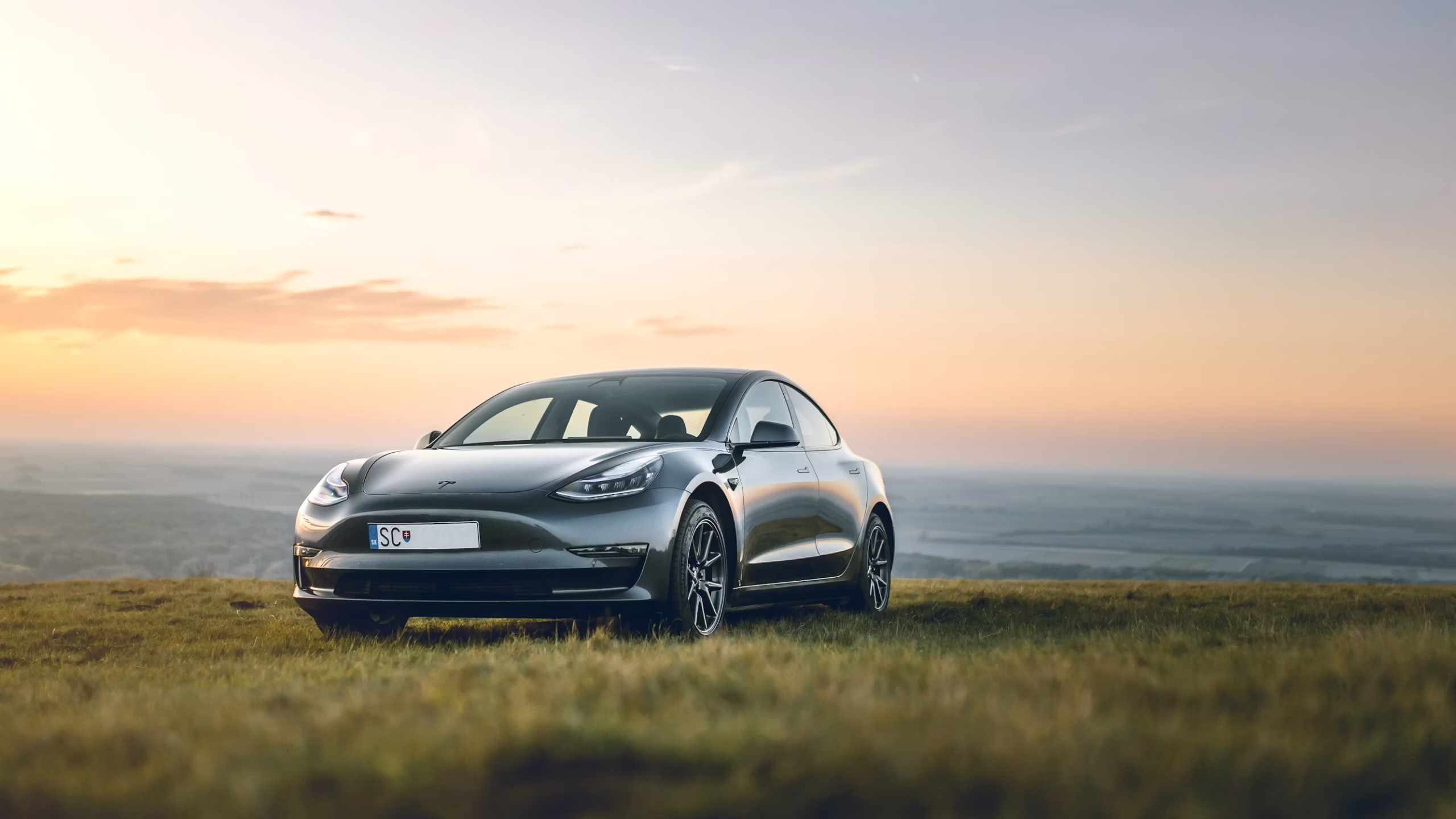
The new support applies to new electric passenger cars and depends on several criteria, including household taxable income, vehicle price, vehicle weight and environmental score.
The main support levels are approximately:
The vehicle must also meet specific conditions. These include a purchase or lease contract of at least two years, a maximum price of €47,000 including the battery where applicable, a running order mass below 2,400 kg and the required environmental score.
In short, the scheme is designed to support cleaner vehicles while maintaining a clear eligibility framework.
For the electric vehicle market, the shift to CEE-funded support helps maintain demand while changing the funding model. For manufacturers, leasing companies and fleet managers, this may influence offer design, purchasing timelines and how incentives are integrated into commercial proposals.
For buyers, the question is no longer only “is there an incentive available?” It is also “how do I access it?” Depending on the purchase channel, the support may be deducted directly by the professional seller or managed through the relevant energy efficiency process.
Companies active in mobility, leasing and EV procurement should pay close attention to the eligibility criteria and administrative requirements. This is not a broad, automatic subsidy. It is a regulated mechanism with specific rules, and those rules can have a direct impact on whether a project or vehicle purchase qualifies.
This is particularly relevant for organizations building fleet strategies in France. The structure of the incentive can influence total cost of ownership, purchase timing and model selection. As a result, the new framework should be integrated into broader planning rather than treated as a standalone discount.
STX helps companies understand France’s evolving energy efficiency regulatory framework and assess how mobility incentives may affect their operations, partnerships or market offerings.
Our team can support clients with eligibility checks, scenario analysis and strategic questions that arise when regulatory mechanisms change.
If your company is considering electric mobility projects in France, we can help determine how the new framework may apply and what value can be captured. STX combines technical, regulatory and financial expertise to simplify complex frameworks and support implementation.
France’s EV incentive shows how mobility support is becoming increasingly connected to energy efficiency policy. The support remains, but the mechanism has changed.
For companies that understand the framework early, this creates an opportunity to act more strategically.